
Who knew toilets could save lives? (well ok, we did)
This World Toilet Day let's lift the lid on parasites!
No one wants to bathe or wash their clothes in ‘poo-water’, yet this is the daily reality for millions of people.
Butt…(yes, we went there), a TOILET is one of the most powerful tools to protect people from disease.
By helping us to provide a clean, private place for people to toilet, faeces will be kept away from the river where people bathe and collect drinking water.
Lifting the lid on poor sanitation
Lack of toilets and proper sanitation can lead to the spread of many diseases. Severe and sometimes fatal infections are transmitted through contaminated water and direct contact with human waste.
Children are particularly vulnerable.
You can help reduce the spread of parasites, intestinal worms, and diarrhoeal diseases by making a gift to QIMR Berghofer this World Toilet Day.
Donate today
Thank you for helping us get to the bottom of poor sanitation.
Secure Payment
Researchers at QIMR Berghofer are on a mission to end 'snail fever'
Our scientists are investigating ways to eliminate snail fever in Lao PDR and Cambodia by using an intensive ‘One Health’ multi-pronged approach.
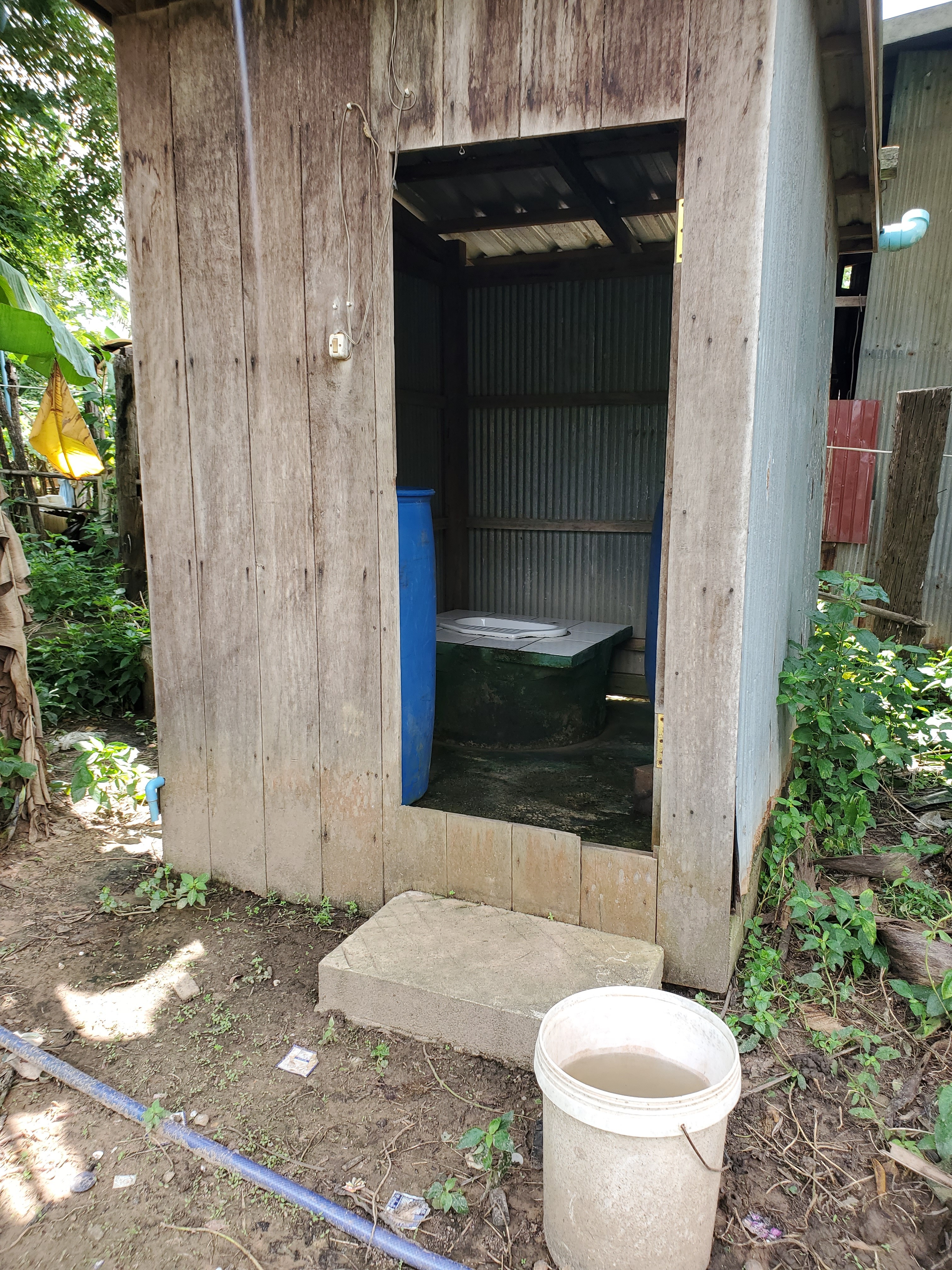
As scientists, we know toilets are one of the simplest and most powerful tools for preventing snail fever infections. After seeing results of a pilot program, we are seeking funding to help build toilets in the areas we visit.
You can help communities protect themselves, their neighbours, and future generations from a disease that causes mental and physical stunting in children, anaemia and liver fibrosis simply by helping fund a toilet.
What is Snail Fever?
Schistosomiasis (Shis-tuh-suh-my-uh-sis) known as snail fever, is a neglected tropical disease. It is caused by the tiny flatworms that live in fresh water rivers which are often a major source of water for villages. People become infected when larvae released by the snails penetrate the skin during bathing, washing clothes, or playing in rivers and lakes.
The larvae then migrate through the body before maturing into adults in the blood vessels around the liver. There they pair up (male and females) and begin producing eggs which are then excreted in the faeces. The eggs hatch on contact with water and directly penetrate a snail host, quickly reproducing to produce a large number of parasites.
Without toilets to contain infected waste, eggs end up in the water continuing the infection cycle.
You can help get to the bottom of disease
Don't hold it in! The urgency to fund toilets is real.
$25
Could supply essential materials like pipe and cement for the toilet's base.
$50
Could fund the construction of a safe floor slab, blocking contamination from reaching the community's water.
$100
Could construct a safe, long-lasting toilet for many families.
Find out more about our research
QIMR Berghofer scientists working in these regions have been conducting a mass drug administration with praziquantel as part of a control program. Our scientists are also developing diagnostics for faster testing and treatment, as well as conducting environmental DNA detection of snail hosts and parasites to identify risky areas in rivers.
The team holds community health sessions on hygiene and toilet use, avoiding risky areas and the importance of being treated. They teach communities how to build the toilets and how to access the materials needed.
Read more about our research
Learn more about snail fever

ACKNOWLEDGEMENT
QIMR Berghofer acknowledges the Traditional and Cultural custodians of the lands, waters, and seas across Queensland, pay our respects to Elders past and present, and recognise the role of current and emerging leaders in shaping a better health system. We recognise the First Nations peoples in Queensland are both Aboriginal peoples and Torres Strait Islander peoples and support the cultural knowledge, determination, and commitment of First Nations communities in caring for health and wellbeing for millennia.
DISCLAIMER
While QIMR Berghofer makes every effort to make sure the information on this website is accurate and informative, the information is not professional or medical advice. The information on this website is general in nature and based on the information available at the time of publication. You should obtain advice relevant to your particular circumstances from a health professional.